How to Make Someone's Favorite Podcast, With Jay Acunzo

Jay Acunzo is an author, creator, marketing expert, and podcast host. Today, Jay is going to teach you his framework for how you can make someone's favorite podcast


Jay Acunzo is an author, creator, marketing expert, and podcast host.
At the beginning of his career, Jay spent time working for tech companies like Google and Hubspot. But, he quickly realized that his passions are creating and storytelling.
Today, he's launched and grown several shows for himself, his employers, and clients at his agency, Marketing Showrunners. He's managed to do this because he doesn't focus solely on growing the number of people who download a podcast. Instead, he focuses more on growing his audience's love for his podcast.
So how can you make sure that your podcast is somebody's favorite podcast?
Today, Jay is going to teach you his three-part framework for how you can make someone's favorite podcast.
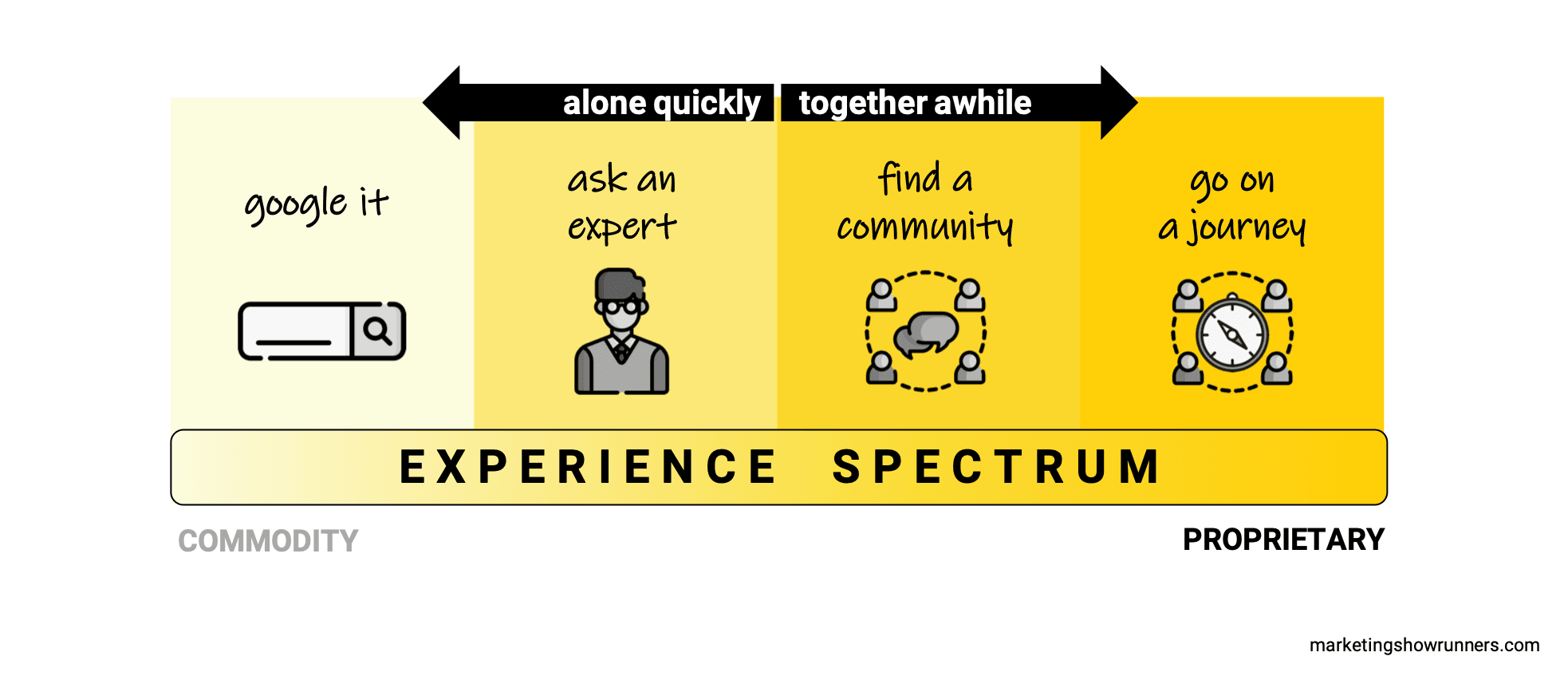
Drawings of the tools mentioned:
The Audience Relationship Pyramid
Jay's blog post about the creator's compass
Want to join a community of high-performing independent podcasters?
Want to swap tactics, get feedback, and grow together?
Want to have your questions answered during AMAs with podcasting legends?
Join us in the Grow The Show online community!
Ready to have Kevin join your podcasting team?
Apply for the Grow The Show Podcast Accelerator!
or watch Kevin's 70-minute Masterclass on how he took his first podcast past 100k and $100k to learn more about the program.
Resources:
>> THE HANDS-DOWN BEST USB MICROPHONE: SHURE MV
Want your podcast to sound as crisp and high-quality as mine does? Easy. Grab the brand-new Shure MV7.
This is the first-ever USB mic created by Shure. It's completely plug-and-play, out of the box, and is the only USB mic that gives you the same silky smooth sound as the Shure SM7B setup, at 1/3rd of the cost.
I literally cannot recommend this microphone enough. All of the convenience. Amazing price.
BY FAR the best bang for your buck.
>> THE BEST REMOTE INTERVIEW RECORDING SOFTWARE: SQUADCAST
Squadcast is by far the best remote recording platform in the game. I use Squadcast to record my interviews for all of my podcasts, because it's the easiest platform for me and my guests to use, and it has the best audio quality.
Within weeks, Squadcast will be introducing video recording too.
Want to give it a go? Use this link to sign up and you'll be able to try the platform for free for an entire interview!
>> THE BEST WEB PLAYER + TRANSCRIPTION EMBEDDER FOR YOUR WEBSITE: FUSEBOX
If you head over to growtheshow.com/episodes, you'll see that each episode features a nifty embedded web player AND an embedded transcript of the entire episode.
This is easily done with the Fusebox plugin, which works for all website providers (WordPress, Squarespace, Wix, and any other HTML Website!)
My favorite part? The transcript gets pasted in super easily, looks great, and the entire text of the episode counts for SEO.
Use this link to sign up for Fusebox and quickly and easily revamp your podcast website.
What would you say is your favorite podcast? I'm not looking for the one that you're currently binging. That's how people usually answer that question. I'm talking your favorite podcast all time. The one that you aspire to be like. The podcast that may have even inspired you to start your own podcast. Which one is it? Which podcast is your favorite? Maybe you have more than one. I have a handful for sure. But whether or not you have one favorite podcast or a couple, pick one now. One favorite podcast to think about. I want you to think about how you feel about that podcast. It's incredibly personal to you, right? You feel like you know the hosts. That podcast has probably had a huge impact on you. Maybe it even changed your life. How I built this from NPR certainly changed mine. And so take a second, pause, think about this favorite podcast of yours. Feel right now how that podcast makes you feel. Feels good, right? Okay, let's switch gears. I want you to think now about your podcast, the podcast that you make. Take the way that you feel about your favorite podcast as a listener and think about the listeners of your podcast, the one that you make. Do you think that there are any people who, when they think about the podcast that you make, they feel the same way that you feel about your favorite podcast? Is your podcast someone else's favorite podcast? Maybe it is for some, maybe not for anybody. Maybe you have no idea, probably the last one, right? Well, that's what this episode is here to help with today. Today, we're going to explore how we can make sure that at least some of our listeners feel about our podcast the way you feel about your favorite podcast. We're going to learn how to make someone's favorite podcast. Now, I've been fortunate enough to make two podcasts that are somebody's favorite and I only know that because people have reached out and actually told me and both of those podcasts have turned into thriving businesses, making five figures in a given month, but I kind of did both of those accidentally. I really didn't have a clear path to making someone's favorite podcast. I kind of got there by luck and by intuition and we can't rely on that. We can't rely on luck and intuition. It's better to have a roadmap, right? Well, actually, today we're going to do one better than a roadmap. Today, we're going to be joined by Jay Akunzo. Jay is an accomplished podcaster with a specialty in storytelling. He's created and hosted three hit podcasts and he owns a marketing agency that helps other brands also create people's favorite podcasts. He has an online course called Growable Shows and soon he'll be launching a community for independent creators. Suffice it to say Jay Akunzo knows how to create a favorite podcast and how to turn podcasting into a business. And no, today he's not going to share with us a roadmap because all of us are on different roads. We'll almost never reach the same exact intersections. So it wouldn't really be helpful to have Jay's map because he went a different path. So today, Jay is here to share something even better. Something that you can use to help you to make sure that your podcast is somebody's favorite podcast no matter what unique twists and turns you may face. Because today, Jay Akunzo is going to share the creator's compass. This is Grow the Show. My name is Kevin Schmidland and my mission is to help you the independent podcaster to grow your podcast audience and monetize now so you can have a thriving podcast business. Today, I'm joined by serial podcaster and show Grower Jay Akunzo who's going to give us the compass that will guide us in making our audiences favorite podcast. My name is Kevin Schmidland and this is Grow the Show. I'm Jay Akunzo, I'm a writer, an author, multi-high-finite creator. Mostly, I make shows that help people make what matters to them. Jay attended college in the mid-2000s and back then, his goal was to become a sports writer. Most said, I wanted to write those big saccharine stories about athletes. So, you know, coming out of adversity is so-and-so and here's their big story and it feels like the hero's journey applied to one individual. And by the time he graduated, he was well on his way, having already worked at the Hartford Current and even ESPN before graduating. But like many bright-eyed bushy-tailed college grads of the class of 2008, Jay found his career path immediately blocked by the worldwide financial crisis. So, he had to find work elsewhere. I got incredibly lucky with the job at Google. Didn't love the job doing sales and like ad sales for Google, but great brand, great perks. I met my wife at the company, so huge ROI on the job for me. But that job wasn't bringing him towards the vision he had of impacting people's lives via storytelling. And that vision was insanely clear to him because there was one particular storyteller whom he wanted to emulate. My storytelling hero, Anthony Bourdain, he had this way of going to places that people had picked over a food truck, grandma's dinner table, and finding profound meaning in the seemingly day to day. And I think he actually arrived at unknown parts of people's story, culture, food, family. Just by asking simple questions and telling narratives. That type of storytelling and creativity wasn't a part of the job at Google. I realized really quickly I didn't want to sell advertising that interrupted an experience. I wanted to create the experience that people actually wanted. I remember finding this little graphic or maybe someone sent it to me. It was a little whiteboard. And it said on the whiteboard, make stuff people like with the greater than symbol focused on that side of it. And on the less than side it said, make people like stuff. Instead of trying to make people like the stuff we make, maybe we should focus on making the stuff people like. That's it. That's everything to me. Make stuff people like it's more effective for your business. It's more fulfilling for you. It's more rewarding for the person on the receiving end to make stuff they like and then try to make them like stuff. So that's modern marketing to me. Try to be their favorite thing. Whatever the personal preferred pick that they have for a specific purpose is you want to be it. With this mission statement in mind, Jay left Google and went to another big tech company HubSpot. And that job, well, it felt a little too familiar. It was my Google experience all over again. Large corporation, no creative control, short term aims, hyper growth, scorched earth capitalism, not for me. So he kept searching. He wanted to find a way that he could combine his marketing skills with his storytelling skills and make it so that the people he was marketing to actually enjoyed being marketed to. Eventually, he found that role. But not exactly in a place you would look for that sort of thing. I found my way to venture capital firm of all things called NextView where they gave me the reins to their brand. So one of the projects I launched at NextView was a podcast called Traction. I think the tagline was creative and clever ways start-ups start. How's that for a six-word description? And so the story we're telling the world is we are not only excellent investors in and thinkers around early stage zero to one movement, not only we were great at that, but also it was not like we have the answers here they are. It was, we have a lot of questions. Like what does it look like for this type of thing that you do or that type of sector or this type of problem? So we became like these idea explorers on the show and the founders of the firm were like giving me full rain to host it, produce it, write it, do everything publicly for it in a way that I hadn't had that kind of control since essentially running my own sports blogs that nobody but my mom read in college. And I fell in love with it. I was like this is what I want to do. I want to tell meaningful stories about people doing meaningful work and I think a show is a great vehicle to do that because it's kind of a roll up a lot of stuff I like and like trying to be good at writing, speaking, evangelizing, inspiring, all that good stuff, storytelling certainly. And I haven't looked back since that moment. So traction to me was like a slingshot for my career. Today, Jay is well known and well respected in the podcasting world. As of now, he has two podcasts. One of them is called Three Clips. And it breaks down the nuts and bolts of some of the most amazing podcasts online. It's almost like if people know song exploder, it's like song exploder meets inside the actor's studio for podcasters. That's the aim of three clips. The other show is called unthinkable. That shows premise, the narrative style show about creativity at work. And so that's what I want to do. That's what I want to do. I want my grand delusion is to try and bring Anthony Bourdain's storytelling style into this world because I think we need it in this niche, in business for creative people more than ever. As a part of that grand delusion, Jay has now launched and grown several shows for himself, his employers, and his clients at his agency marketing showrunners. But I didn't invite Jay Conzo on to grow the show because of his impressive and extensive track record. What I really want to know more about is his philosophy for growing a podcast because unlike many other podcast experts, Jay doesn't focus solely on growing the number of people who download a podcast. Instead, he focuses on growing the audience's love for the podcast. Try to be their favorite thing. Whatever the personal preferred pick that they have for a specific purpose is, you want to be it. But why is that? Why is it so important to make somebody's favorite podcast? When you're someone's favorite, it's not like you're number one in the category or objectively and academically reviewed to be the best made or something like that. Favorite is profoundly personal. So your favorite t-shirt might be this ratty old thing you've been wearing since you were a kid, but it's your favorite t-shirt. And that applies to anything. Like my favorite team in all of sports is the New York Knicks. One of the worst teams in all of sports is the New York Knicks. One of my favorite things is one of the objectively worst things in the category, really? That's how it works. So we have this irrational bias towards an emotional investment in our favorite things. So if you're creating something, that's the unfair advantage you want to have. As someone who makes podcasts and documentaries now, I'm always struck by people who've been doing it for years and years. Those people can just say to their following, hey, now I'm on Clubhouse, now I'm on TikTok. I have a newsletter. I have a live event. And they flock to take action, those people's fans, because they're just so irrationally biased towards whatever it is they do. I mean, that's an enviable position that we all want to be in. And the best part about that position is that it really has nothing to do with how large your audience is. You don't need to have a million people. You need a small number of people reacting in a big way to what you do. And the more you serve them more deeply, the more it will compound, the more they will get you others. So that's where we got to start. The goal is to be their favorite. And the real question is obviously, well, how do you do that? That is the real question. And unfortunately, nobody knows. So thanks for tuning in to this. No, I'm just kidding. Of course, we're going to dive into how to create someone's favorite podcast. And of course, there's a handy three-part framework. And lucky for us, J is here to share. Now, unlike previous three-part frameworks that we've learned on this podcast and that tend to contain three simple actionable steps that you can take today, this one's going to take a little more imagination. Because instead of three steps, this framework is a set of three spectra. What a word, by the way, spectra. Not spectrums, spectra. We need to use that more often. Yes, spectra, the plural of spectrum. According to J, any given podcast, including yours, falls somewhere on each of the three spectra within J's framework for how to create someone's favorite podcast. And the goal is that on each spectrum, your podcast lands at the top. If it does, then you'll be making someone's favorite podcast. So what are they? What are the three spectrums? Spectra. Right. What are the three spectra that we need to be aware of? Well, let's just start with the first one. J calls this one the experience spectrum. The experience spectrum shows you how your show is being experienced by the audience. So you know, am I creating a commodity? That's bad. We don't want to create a commodity. More on that in a second. Or am I creating some proprietary experience that will change people? Preparatory experience is good. That means that it's unique to you. Only you can create it. And it's something that will have a profound effect on the listener. That's what we want. But let's dive a little bit deeper into those two. On the left side of the spectrum, the side you don't want to be on is when your podcast is a commodity. And only shares what J calls transactional value. Think of it like a quick injection of value or information. These are the shows that simply offer news, conversations, updates, tips and tricks. Those shows, transactional shows, commodities are rarely someone's favorite podcast. The point of a transaction is to finish the transaction. To take away whatever the transaction promises you. So when you're in the grocery store line, when you're trying to buy something on Amazon, the point is not to spend time in the process of buying it and acquiring it. The point is to have acquired it in the past. And a lot of podcasts operate like that. For these types of shows, it doesn't really matter to the audience who is giving the information or even how they get the information as long as they get the information. You're offering a commodity. I can get it anywhere and you happen to be anywhere. I happen to find you and not someone else. This is not the podcast that you should invest your blood, sweat, and tears in. Because if the listener could get the information anywhere, why would they spend 45 minutes getting it from you? No offense. No, we don't want to offer our listeners transactional value. We want to land on the other side of the experience spectrum. So on the opposite end of what I'd call the experience spectrum is transformational experiences. So instead of transactional value, a transformational experience changes you. It's helping you see the world a certain way. You want to be on the side of transformations because that's what a show is for. It's not having listened. It's the listening. The experience is the value. Think about your favorite podcast again. Why is it your favorite? Is it because the host gave you five tips you can use today? Or is it because it changed your perspective? It made you look at something or even your entire life or yourself in a totally different way. That's transformational value. So how do we know where a show falls on the experience spectrum and whether it's more transactional or more transformational? Well, let's make up an easy example. Let's start with a coffee brand. So on the left side of the experience spectrum, you have transactional type shows. The coffee brand example might be like the coffee lovers podcast. And here it's a general show about all the things happening in coffee, interviews with industry experts, updates and news on trends, techniques, technologies, etc. The coffee lovers podcast. All of that is great valuable information. But you can get it anywhere and you can get it much faster everywhere else. That information is best experienced by googling it or even just asking Siri or Alexa. So that is like the left most piece of the experience spectrum. Let's move it one tick to the right along this spectrum. This next section is Ask an expert. Maybe this expert driven version of the coffee lovers podcast. We can call the home barista. This hypothetical show is hosted by Sally who wants to be a coffee expert. Sally offers listeners her unique take her expertise on the coffee industry. So the home barista is covering the commodity type stuff. But Sally has a little bit more to offer because she's an expert. As crazy as it might sound to some, expertise is still commodified. It is transactional. But wait a second. I thought that a commodity is something that the listener can get anywhere. How is it that Sally's expert advice then is still transactional? When you're googling something or asking an expert or being told by an expert, you're doing this alone quickly. So expertise is also accessible immediately from pretty much anywhere. One moment you can decide you want an expert take, you Google it, you get it, and you're on your way. You don't need to spend any time and you can get what you need all by yourself. So then, what does it look like to make your listeners experience more transformational instead of transactional? You tip past that middle ground between doing things alone quickly. In other words, a transaction based show or a download of information towards something more community driven, something together for a while, a journey, something transformational. So what would that look like for Sally's coffee podcast might be the same name. But now it's about the story of what could be as a result of listening to Sally's podcast, the home barista. In other words, she has a story of what should be. She has a vision for the industry of coffee or for the coffee consumer. Whoever it is she's trying to serve. And she's saying willingly to the audience, I don't actually have all the answers. You can view me as an expert. That's fine. This show is about asking important questions that Google can answer. That experts don't have all the knowledge bottled up in one expert's brain. So join us on a journey as we do that. When listeners join that journey and stay for a while, they can connect with the other listeners who are also at that same point in the journey. You're letting people come and feel like they're a part of something. They're a part of something bigger. And also because you're saying to the audience, I see a mountain peak in the distance. But there's a jungle between us and each episode is like us hacking through the jungle. It's way more enticing. This is beginning to sound like something that can be somebody's favorite podcast. Now you're actually starting to develop a premise for your show. You have a point of view. It's not just the topics you cover. That's not proprietary. What makes it proprietary is when you add to the topics, some kind of hook, a grand quest, an interesting gimmick or format. Some point of view on the terrain you're trying to cover. That is what separates you. So now you start to become a lot more transformational. And the final tip from googling it to asking an expert to a community feel to the show is now the community goes on a journey. So transactional based shows are like googling it. I'd rather Google it than have to listen to it. But all the way on the other end of the spectrum, those transformational experiences, they feel like journeys because of that positioning, because of the story of what could be. Your show is transformational if the listener feels like they're in a unique community and that community is going on a journey together to a compelling destination. Your show helps them transform themselves along the way. So how does this fit into the coffee example? Well, there's actually a real life example of a transformational coffee podcast. It's made by Death Wish Coffee, who claims to make the world's strongest coffee. They have a podcast called Fueled by Death Cast. And as the name implies, it's about being fueled by death. We know this is a finite number of days that we have left here on this Earth and we want to go after the life we want with a passion. So they talk to people who are motivated by this specter of death, this prospect that this is a finite thing we're living through. This merry-go-round only goes around once. So you better get after the life you want to live aggressively. So who is doing that? Well, they don't need to just talk to people in the coffee industry. And that's the difference between a community-based show like the home barista, this fictional show from Sally, where yeah, she has a vision for the industry. But she doesn't have quite the grand journey approach to it. Fueled by Death Cast does. Because, sure, they talk to some people in coffee, but mostly they talk to Olympians. They talk to tattoo artists. And rarely, if ever, does coffee come up? What they're interested in knowing and owning in the minds of their audience and exploring more deeply than anywhere else is, how does your life differ when you're motivated by this idea of death? So that, to me, is the utmost version. When you start at a Googleable bit of information like the Coffee Lovers podcast and you move it slowly across the experience spectrum where you get is a show like Fueled by Death Cast, where it's completely proprietary. And it's not proprietary because of the topics or even the editing and the technology. It's proprietary because they've articulated this communal journey. They have a proprietary experience because it's going on a journey. So that's the end of the experience spectrum. So that's one of our three spectra, the experience spectrum. If you're all the way to the right of the experience spectrum, which is where you want to be, your listener experiences the show in a way that is transformational, and that gives them a feeling of community and that takes them on a journey to a vision for what could be. But the challenge here is that we don't have 100% control over how the listener experiences our show. We can't just pick them up and place them where we want them to go on the experience spectrum, right? So the question then is, how can we control the listener experience? The experience spectrum reveals how others perceive the work. Now we have to actually change how we perceive ourselves. In other words, we have a role and can exert control over the resulting experience. You can't remove yourself from the work. So how do we actually improve the experience? Well, now we need another tool. And that tool is spectrum number two, the style spectrum. So just to plant the visual, if you picture the experience spectrum, then we'll compare it to the style spectrum. The experience spectrum ran left to right. And the left side was commodity. And the right side was proprietary. So you move from doing something that feels like a commodity to a proprietary show. Now you can introduce the style spectrum. This runs top to bottom up and down. If the experience spectrum is the X axis, the style spectrum is the Y axis. So the style spectrum answers a second critical question. What is my role in creating a great experience, a transformational experience for the audience? For this spectrum, we're thinking about the unique style that we, and only we, can bring to the podcast as its host. We want to build a show that revolves around us, and that brings out the very best in ourselves. There's a great analogy to think about this part, which is, you know, the thing I find myself binging and looking forward to during the pandemic is stuff related to Marvel. So I'm a Marvel cinematic universe nerd, like millions of other people. Here's an analogy to think about your role in the show, and how your show serves you, as well as the listener. In the Marvel comics and the movies, Tony Stark is a charming, brilliant person. He's a genius, he's a billionaire, he's a philanthropist. But if you sent Tony out into battle as Tony, he'd be crushed. And that's why Tony built himself, the Iron Man suit, which is this vehicle that's been strategically and uniquely tailored to maximize his best attributes, and to add new abilities that he wouldn't have otherwise been able to possess. A very simple one, flight. Inside the Iron Man suit, Tony Stark is not a charming, genius person. He's a superhero. And so we should approach our shows and our show development, like building ourselves an Iron Man suit. It's a vehicle strategically tailored to what we want to do. Your format, how you actually move through the topics and the hook, the hook you select, the sound and tone, everything about your show should be tailored to bring out your best, and maybe give you some new abilities too. Because if you really distilled down a show into three things to develop, it becomes a lot simpler. There's the premise, it's what you explore and how you explore it. Then there's the format of the episode, the structure, then there's the talent. Well, if you can step into a vehicle that has the right premise and the right format, the right structure, the talent becomes not just yet another person interviewing somebody or a monologue host, the talent becomes a podcasting superhero. Now, building your podcasting Iron Man suit doesn't require the crazy technology that Tony Stark uses. All we have to do is build a show that brings out the very best in us. By doing so, we will be aiming for the top of the style spectrum. But again, how do we know where we currently fall on the style spectrum? You can plot it very similarly on a spectrum of four different nodes. So on the bottom, there's removed. You are completely removed. Your style, your personality, the way you are on the show, it's almost like it doesn't matter that you're a part of it. So you're completely removed. At the very top, which is where we want to get to, is your present, your fully present engaged bringing out the best of the best that you have to offer. The bottom of the style spectrum, when you are removed, which is what we're trying to avoid, looks like this. You're the most removed when you simply report facts. You report the news. You talk about what happened in the industry. Tell the story of something else. You're just reporting the facts. You could be a Wikipedia page or something similar. So a great way to think about this is if you're a commodity, you're just saying to somebody, here's some gold, you have some now. When you're reporting, you're like, I've collected some gold. You have some now. There's not much story there. Right, your involvement doesn't matter. You're just like, I happen to be the one that gathered these facts. So the best case scenario is that you're a curator. The worst case scenario is that you're a placement over audio for a Wikipedia page. So that's not where we want to be. It's very hard to make anything that someone's favorite show, very hard to resonate emotionally or earn the trust and love you need over time with anyone. So that's being at the bottom of the style spectrum. You are removed. Your personality and skill set has nothing to do with the show. And if you were suddenly replaced as the host one day, the show really wouldn't change. That is not what we want. But what would it look like to improve that? What would it look like if we added just a little bit of ourselves into the program and we became a little bit more present? Now you can move one step above reporting, a little bit higher on the style spectrum, a little bit less removed, in other words, you're more present. And that's moving from reporting to analyzing. So instead of just reporting on, and this is what happened, now on analyst, you're connecting facts. You're like, and this is how this relates to this other thing. And this is why you should look over here. Okay, you see it? Yep, that's the fact on the right. Now on the left, you see that fact. Great. And those two things actually connect. Right? So now you're analyzing. You're collecting facts, but you're also connecting facts. And that can be somewhat useful, right? Because it's helping people further understand something. You're not just saying, this is what happened. You're almost interpreting and how that fits in the broader context is x, y, or z. Right? So if you were doing the coffee lovers podcast, you might say, this is the trend that we're seeing. These are the new technologies as a result of that trend. And you can expect them to continue for x, y, or z months, given this historical context that we've seen in the industry for years. Very factual still, not much personality. You're still not very present, but it's got more value and it's got more you when you analyze, not just report. So in the classic journalistic sense, you become a little bit more like a columnist, not a reporter, but you're not quite all the way there. Because you can go one step further on the style spectrum still to opine. From report to analyze to opine to give you your opinions on something. This is the third step up the style spectrum ladder. You give your subjective opinion on things. Now again, it has to be built on a strong foundation of facts and analysis. We're not just saying become an op-ed writer without actually understanding the space you operate in. So I'm not saying that these are all bad. I'm saying they build on each other. Report, analyze, opine. I use the golden analogy earlier. We move from, you know, I've collected some gold to I've collected some gold. And here's what people tend to do with gold. That's the analyst to now you're saying I've collected some gold. And here's what people should do with gold. You're giving an opinion. You actually have a personal stake or a personal voice in whatever it is you're creating. So you move from objective observation in the bottom half of the spectrum. Report and analyze to more subjective beliefs at the top starting with your opinion. So to review, the bottom of the style spectrum is a spot where you're just reporting facts with little to no personality or opinion mixed in. The middle of the spectrum mixes in your opinion a little bit. Instead of saying what can happen, you're explaining to people what should happen. It's starting to matter more that you're there. That's pretty good, but we're not striving for the middle. I think we most want to be where we're most present. The top of the style spectrum, which is to inspire. And we don't mean to inspire in the way that fluffy Instagram fortune cookie quotes try to inspire. Those are nice, but they don't get people to do anything. This is different. Let's call this practical or useful inspiration. Because again, it's built on facts that you've reported, analysis that you've done or others have done, your opinions that are well-wrought, well-meaning, and now you actually have useful inspiration, positive, practical inspiration that people can apply to their lives. And all of this, if you summarize all of this, it's inserting your personality as forcefully as possible. When you look up the definition of personality, it doesn't mean you're big. It doesn't mean you're loud or funny. It doesn't mean you're charming, necessarily, in the kind of American classic sense. You know, almost like there's a little bit of sort of dripping with swiveness in Americans. You know what I mean? Like there's that perception of charm. Personality just is the totality of qualities and traits of character and behavior specific to you. And if you're hiding some of that, you're removing yourself. And that's why all the way down the style spectrum is removed. To be fully present at the top of the style spectrum, you're sharing the totality of who you are, your full self fully present. And that is an ingredient that nobody else can copy. Alright, so let's combine this with the experience spectrum. What would it look like if we maxed out? And we found our show on the top of the style spectrum, the y-axis, and the far right of the experience spectrum on the x-axis. And now you have a show that is both inspiring. And it feels like it's a communal endeavor to change something, to go on a journey together. And again, it's practical inspiration. I don't have to set it to some sappy indie rock song. But I do have to say to the world, there's something better here. Let's explore it. And I've learned how to control my voice, control my cadence, control my storytelling, my quirks, and put it through a microphone. It's a craft. It's not vapid, it's practical inspiration. That's the goal. You want to maximize both the style spectrum and the experience spectrum. And I think in doing so, you move your show from a transactional value based show to a transformational experience. Now we're starting to connect everything. The most important result of this is that your show feels personal. All the way back to the beginning, I mentioned that the goal is to be their favorite. And being someone's favorite, or you, the listener, thinking through, what is my favorite thing? That's a profoundly personal experience. Then the last question is, how do the experience spectrum and the style spectrum combine to affect how others feel about the show and about us? In other words, what makes them declare that's my favorite show? Again, think of the experience and the style spectrum together as a graph. The experience spectrum, which plots how the audience experiences your podcast, runs left to right on the horizontal axis. On the far left of the experience spectrum, which is bad, is offering a transactional experience. And the far right of the spectrum, which is where we want to be, offers a transformational experience. The style spectrum, which is how much of yourself you bring to the show, is the vertical axis running up and down. If your show lands on the bottom, you are fully removed. The show doesn't reflect you or your unique personality at all. If your show is towards the top of the style spectrum, you are fully present. The show has been molded around you, your strengths, and your personality. The most important result of this is that your show feels personal. All the way back to the beginning, I mentioned that the goal is to be their favorite. And being someone's favorite, or you, the listener, thinking through, what is my favorite thing? That's a profoundly personal experience. So if we know, or we can plot using these tools, how do others experience our shows? How do we personally then influence that experience, the experience spectrum, and the style spectrum, respectively? Then the last question is, how do the experience spectrum and the style spectrum combine to affect how others feel about the show and about us? In other words, what makes them declare that's my favorite show? And this is Jay's final tool. I call this tool the audience relationship pyramid. And the goal is to land at the top of the pyramid. That means that your podcast is the listener's favorite podcast. Picture a triangle with four layers. Each layer of this triangle, or pyramid, is a combined step on the experience spectrum and the style spectrum. So it's like the pyramid is on top of the graph that we've been working with. But it's tipped 45 degrees and it's pointing directly towards that magical place where you've maxed out the experience spectrum and the style spectrum. And every layer that you climb up this pyramid, the audience relationship pyramid, each layer gets you one step closer to being someone's favorite podcast. So let's start with where we don't want to be, which is the bottom layer of the audience relationship pyramid. The biggest layer is relevant. And I think this is a message we hear a lot about. We got to be relevant to our audience. Okay, here's the problem with that. In this world of infinite choice, nobody pays attention to anything that is not relevant to them. If you're irrelevant, it's like you don't exist. We want to exist. Everything relevant is nowhere near enough to be someone's favorite. So that means we have to keep moving up the pyramid. The second layer above relevant is enjoyable. Same deal, table stakes, your podcast has to be enjoyable. It has to be entertaining. Entertaining doesn't mean vapid. It doesn't mean hollow. It doesn't mean pure distraction. It's not the candy content. It might deem that entertaining, but you can enjoy an experience that is not meant to just distract you. It's meant to change you. It's meant to educate you. It's meant to connect you with others. So also table stakes just like being relevant is being enjoyable. So you have relevant at the bottom layer, then you have enjoyable. We're halfway up the pyramid. Halfway up the y-axis, the style spectrum, and halfway across the x-axis, the experience spectrum. We're right in the middle of this whole thing. We're average. We're okay. We're not someone's favorite. So let's take another step. Now you start to move up one layer further, and it's where we want to be. Because it's in the world of fewer options that are more irreplaceable. Because if you're relevant and enjoyable, you're among a lot of options, even in a category, that are very forgettable. We have to become among the choice few. So the third level, the third little layer of this fortress, or third floor, if you will, is to be refreshing. Now I say refreshing instead of different or unique for a very specific reason. Being different is something we hear a lot about. I give a lot of speeches, especially pre-COVID. I could get up on a stage and give my entire 45-minute keynote with my back to the audience. I'll be the most different speaker they've ever seen. But I will be terrible, and they will not like it. I'll be unwelcome. So we want to be different and welcome. And I call that refreshing for a very specific reason. Because when you ask, how can we be different on our show? You start asking different from whom. And you start looking at your competitors. But when you ask, how can we be refreshing, you have to say refreshing to whom. Your audience. Now we're talking. Listen first. We're getting closer. The show is refreshing. But it's not yet someone's favorite. We've still got one more level. Very tippy top, if you are relevant, if you are enjoyable, if you are refreshing, you might feel personal. And at that level, you're among a very few number of options available to the audience. And you become irreplaceable. So if at the bottom of this pyramid, there's a lot of options that are forgettable. At the very top, there are very few options, and they're all irreplaceable. If I lost my favorite shirt, I would be devastated. Devastated. I can't believe a buddy of mine in New York now roots for the Brooklyn Nets instead of the New York Knicks. I'm like, what are you doing? I thought the Knicks were your favorite team. Apparently not. Because you replace them, right? Or they done something egregious over decades of my life, which that's a whole other podcast. Slash therapy session for me. But I'm sticking with them because they're my favorite. I wish they weren't irreplaceable. I wish I was a casual fan of the Knicks. I wish they were just relevant, enjoyable, and maybe refreshing. But they're not. It's a personal relationship. It's caught up in my identity of who I am. When you share something to someone else and say, this is my favorite, you're self expressing. It's about your identity. It says something about you, your favorite show, your favorite, anything. That's where we want to be. And there are only a small number of those options, and they're all irreplaceable. So that's the goal. And when you put it all together, the style spectrum going bottom to top, the experience spectrum, going left to right. If you are fully present, top of the style spectrum, and your show feels like that communal journey. It's proprietary, the right side of the experience spectrum, then you're at the tippy top of the audience relationship pyramid that kind of runs diagonally left to right. You can kind of tilt the pyramid to the right and slam it in between this little matrix we're creating. And now it kind of looks like a compass. And so you put all three tools together and you have what I call the creators compass, which points to the one north star we need to feel personal to be the audience's favorite show or favorite things. That is our destination. We want our podcast to become the listeners favorite podcast. And Jay just gave us the compass to get there. Now granted, we will not be able to become the favorite podcast of everybody in the world. And it could take a decade to become the favorite podcast of millions of people. But we can become the favorite podcast of a thousand people within a year or two. That is totally doable. I've done it twice in less than three years. And I think it's pretty safe to say that a thousand people would be down to support their favorite podcast monetarily. Let's say at ten bucks a month in exchange for some bonus content and extra goodies. That sounds reasonable, right? Well, if that was the only way that this hypothetical podcast was monetized, which wouldn't make any sense, but let's go with it, that show, which was a thousand people's favorite podcast, would be making ten thousand dollars a month. And that wouldn't even have to be the end of it. Because once you figure out how to make it work for a thousand people, it's actually way easier to make it work for ten thousand, a hundred thousand, even a million with time. Getting your podcasts first, a thousand true fans is the most difficult destination. But now, thanks to Jay Akunzo, we have the compass. So, from this point forward, we are no longer trying to make podcasts that appeal to as many people as possible. The name of the game is not for a million people to know about our podcast. We want a thousand people to love our podcast. That is the goal that will set us on the path to living the podcast our life and to having a thriving podcast business. Now, I am sure you are currently reeling from what has become a surprise geometry lesson. This compass was pretty hard to describe without any visual aid, but huge props to Jay, who still made it happen. Either way, this concept is kind of complicated, and we can't rely on Jay's and my ability to explain it all via audio alone. So, if you check out the link in the show notes to the drawing of the creative compass, you will see all three of the spectra that make up Jay's creator's compass, and you'll be able to visualize what we've been talking about. And if you want to take it a step further, you can grab Jay's ebook that dives even deeper into the creator's compass. That book, which is called the creator's compass, is linked in the show notes. And while you're down there in the show notes, you'll also find a link to the Grow the Show Facebook group. So, you might as well give it a click and join our community as we discuss the creator's compass this week. Together, we can help each other to climb the audience relationship pyramid and make our podcast our listeners favorite podcast. On top of that, if you would like to ask specific questions about how you can elevate your show into someone's favorite show, you can join me and Jay on Clubhouse. We'll be having a live Q&A as a part of ClubPod on Clubhouse next Wednesday, March 10th at 3pm Eastern. The link to that session is in the show notes. And if you need an invite to Clubhouse DM me on Instagram. I've got seven extras as of now. So, there you go. You have the means to create someone's favorite podcast. We've just explained to you the entirety of Jay's creator's compass. We've provided the drawing, the ebook, the Facebook group, and the Clubhouse room to help you understand and work on this. So, there are no more excuses. You now have what you need to make someone's favorite podcast and turn that podcast into a thriving business. This has been Grow the Show. Grow the Show is a Q9 production. This episode was produced and hosted by me with associate production by Catherine Nails, post production by Max Graham, and a very special thanks to Jay Akunzo. For Grow the Show, my name is Kevin Schmidland. See you next week.